
How AI Tutors Are Replacing Traditional Trainers — And What It Means for L&D
AI tutors are transforming corporate training. Discover what this shift means for L&D teams, how leading companies are adapting, and how Edynic helps organisations stay ahead.
5/1/20264 min read
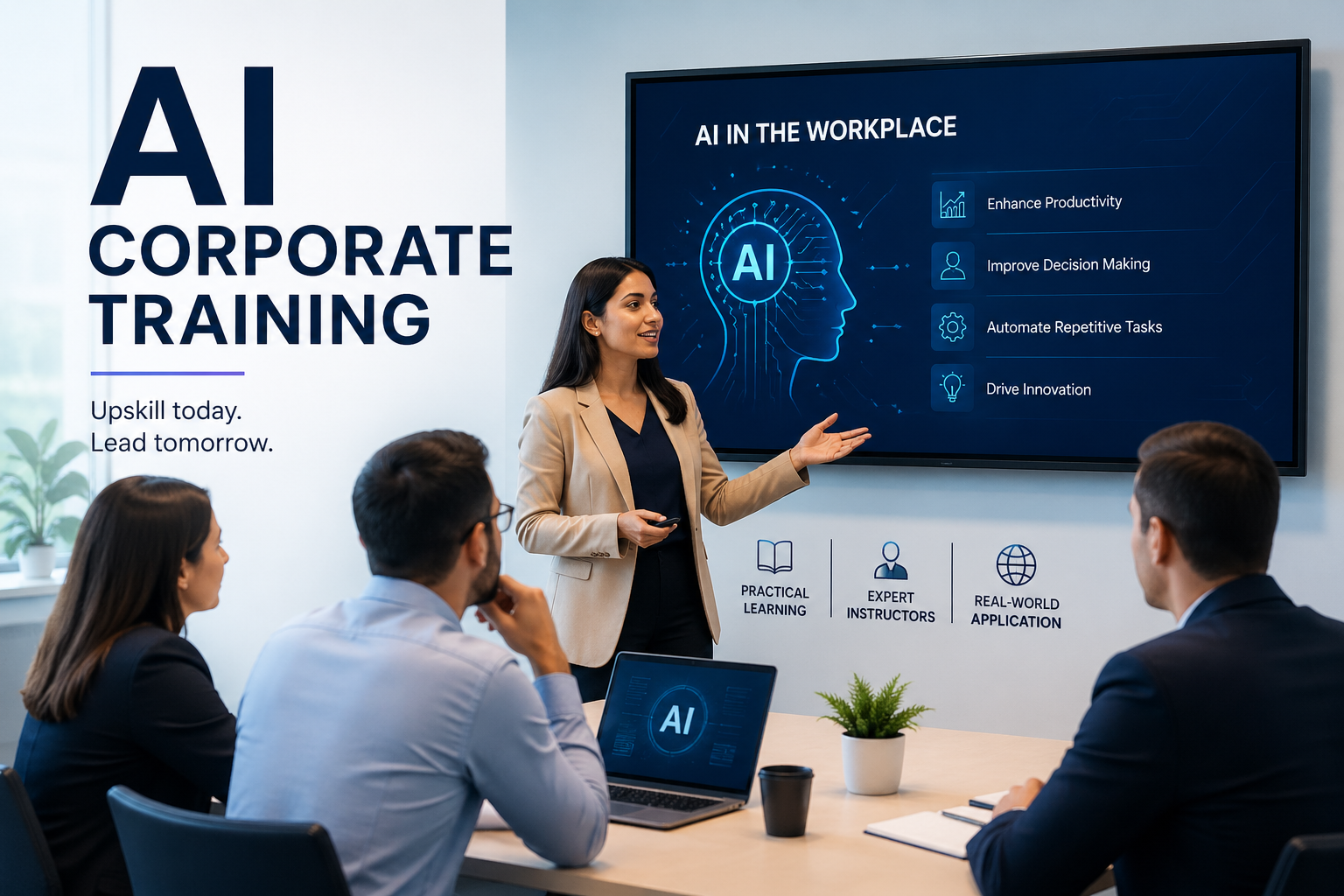
How AI Tutors Are Replacing Traditional Trainers And What It Means for L&D
Not long ago, a corporate trainer was irreplaceable. They stood at the front of a room, read the audience, adjusted their pace, cracked a joke when energy dipped, and answered the question nobody dared to ask out loud. Today, an AI tutor can do all of that at 3am, in 40 languages, for 10,000 employees at the same time.
The question is no longer whether AI will change corporate training. It already has. The real question is what your L&D team does next.
What Exactly Is an AI Tutor and Why Is It Happening Now?
An AI tutor is not a chatbot with a quiz attached. Modern AI tutors are sophisticated systems that personalise content delivery, assess understanding on the fly, respond to learner questions in natural language, and adjust the pace of learning based on how each person is engaging.
Three things have brought this moment about. Generative AI has matured to the point where it can hold genuinely useful, pedagogically aware conversations. Learning management platforms have caught up and can now integrate AI outputs smoothly. And the pandemic permanently normalised digital-first learning for workforces around the world. The infrastructure is ready. Employees are comfortable. And the business case is increasingly hard to ignore.
A skilled human trainer can only teach so many people, so many times. An AI tutor has no such ceiling. That is what makes this a structural shift rather than just another trend.
The Five Things AI Tutors Do Better Than Humans
This is not a story about replacement. It is a story about capability. In specific, high-volume, data-rich situations, AI tutors genuinely outperform what any human trainer can offer.
They are available around the clock, across every time zone. A global workforce does not have to wait for a scheduled session or work around a trainer's calendar.
They offer true personalisation at scale. Each learner gets a different path based on their role, their prior knowledge, and how quickly they are picking things up. No human trainer can do that simultaneously for thousands of people.
They create a judgement-free space. Learners ask questions to an AI tutor that they would never ask in front of colleagues. That shift alone dramatically improves how much people actually absorb.
They are consistent. Human trainers have off days. An AI tutor delivers the same quality every single time.
And they generate rich data. Every interaction produces insight about where learners are struggling, how long they are spending on each topic, and what needs to change in the programme. That kind of feedback loop is invaluable.
Real World Examples of Organisations Already Doing This
A major European bank rolled out an AI tutor for compliance and regulatory training across nearly 28,000 employees. Within the first two interactions, the system identified individual knowledge gaps and automatically served targeted content to address them. Onboarding time fell by 40 percent and compliance assessment pass rates climbed from 71 percent to 94 percent within a year.
A fast-growing technology company needed to bring 600 newly promoted managers up to speed across 18 countries at the same time. Flying trainers around the world was not feasible. Instead, they used an AI tutor to deliver role-play simulations, coaching conversations, and real-time feedback on communication style. Manager effectiveness scores, as measured by their direct reports, improved by 31 percent over six months.
What This Means for L&D Professionals
Many articles on this topic jump to a frightening conclusion and suggest AI will make L&D roles redundant. That is not what is happening. AI tutors are automating the delivery of training, not the design of it. And design is where the real expertise lives.
The professionals who will thrive are those who grow into three areas. The first is learning architecture, which means designing the curriculum that AI tutors then execute, including the sequencing, the objectives, and how understanding is assessed along the way. This requires genuine pedagogical expertise and cannot be automated. The second is content strategy, which means crafting the prompts, scenarios, and feedback structures that make an AI tutor genuinely effective. A poorly designed AI tutor produces poor learning outcomes, full stop. The third is data interpretation, which means reading what the analytics are telling you and turning those signals into decisions that improve the programme over time.
The L&D role is not disappearing. It is moving to a more strategic place. That is a better place to be.
Where Human Trainers Still Have the Edge
AI tutors are excellent at knowledge transfer and practised skill development. But there are areas where a human being is still essential and will remain so for the foreseeable future.
Anything that requires deep emotional attunement, such as executive coaching, conflict resolution, DEI facilitation, or sensitive leadership development conversations, still needs a skilled human in the room. Empathy, cultural awareness, and the ability to read what is really going on beneath the surface are not things AI can replicate well yet.
The smartest organisations are not choosing between AI and human trainers. They are designing a deliberate hybrid where each plays to its genuine strengths. At Edynic, that question sits at the heart of everything we do. What does this learner actually need, and who or what is best placed to deliver it?
The Bottom Line
The organisations that will attract and keep the best people over the next decade are not the ones that wait and see. They are the ones building smarter, more responsive learning cultures right now. AI tutors are not a threat to good L&D practice. They are an amplifier of it. But only when they are deployed with clear thinking, strong design, and the right strategy behind them.
That is where the real work is. And it is exactly the kind of work Edynic was built to help with.
If you are thinking about how AI fits into your training programmes, or if you want to redesign your L&D approach from the ground up, we would genuinely love to have that conversation with you. Visit us at www.edynic.com or reach out directly at www.edynic.com/contact. We are here to help you get it right.
© 2025. All rights reserved.